Brown recluse spider management addresses the unique biological habits of Loxosceles reclusa , a species endemic throughout Middle Tennessee. Unlike web-building spiders, the brown recluse is a nocturnal hunter that…
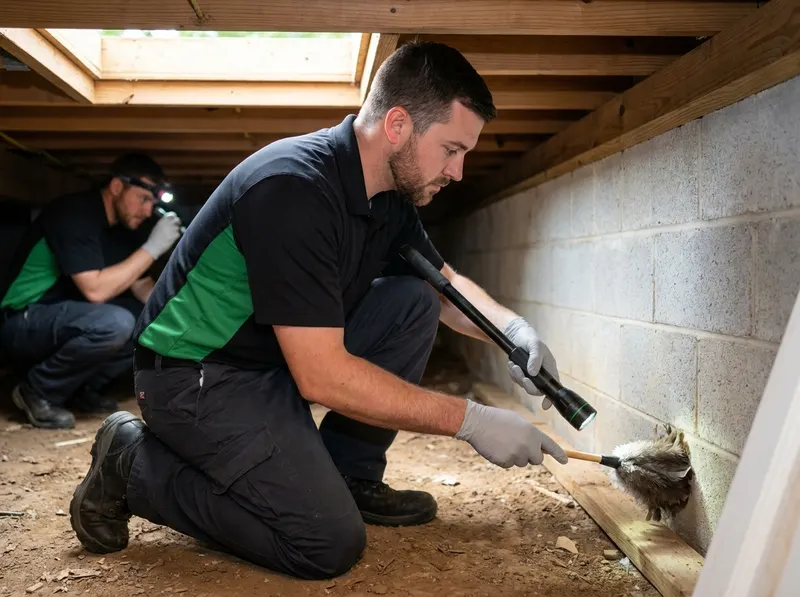
Brown recluse spider management addresses the unique biological habits of Loxosceles reclusa, a species endemic throughout Middle Tennessee. Unlike web-building spiders, the brown recluse is a nocturnal hunter that rests during daylight inside dry, undisturbed voids such as cardboard storage boxes, crawlspace subfloors, and framing cavities. Effective control relies on the strict technical guidelines established by the US EPA Integrated Pest Management framework. Liquid surface sprays alone rarely solve an infestation because the long legs of these arachnids keep their bodies elevated above treated horizontal substrates, preventing significant chemical uptake. Instead, management requires microencapsulated formulations applied to structural thresholds alongside dry silica-based dusts blown deep into wall cavities where spiders hide.
Older architectural styles found in Nashville, such as early twentieth-century bungalows in East Nashville, Belmont-Hillsboro, and Inglewood, often present interconnected wall voids, lath-and-plaster construction, and complex attics that shelter spider colonies. Similarly, historic properties in Germantown or mid-century ranch homes with vented crawlspaces in Crieve Hall and Donelson provide undisturbed harborage. Crawlspace moisture management and soil ground covers align with the structural moisture guidelines outlined by the US Department of Housing and Urban Development to reduce secondary prey insects like silverfish, booklice, and crickets, which brown recluse spiders consume. For properties near dense tree canopies like Shelby Bottoms Greenway or Radnor Lake State Park, technicians examine exterior masonry weep holes and foundation perimeters where spiders establish satellite harborages.
Systematic suppression follows four discrete phases across the structure:
Targeted residual formulations are selected according to toxicological assessments provided by the National Institute for Occupational Safety and Health, ensuring non-target safety for residents and pets once deposits dry. Diagnostic findings are cross-referenced with regional arachnological research from the University of Tennessee Extension, addressing the pest biology specific to Davidson County. For exterior applications, perimeter treatments maintain compliance with surface water protections overseen by the Tennessee Department of Environment and Conservation, protecting Nashville municipal waterways from off-target pesticide runoff.
Every job gets a firm, written price after a free on-site visit.
Tell us about your brown recluse spider management job in Nashville and we'll send a clear, written quote, usually the same day.
 RavenStone Pest Guard